This page holds information you need to practice the National Anthem — recordings, lyrics, feedback, and guidance — so you can walk into that ceremony with confidence.
You already know where the melody goes.This space is here to help you walk the path more steadily, note by note.
Listen First
The Recordings
📘
Singing the National Anthem — Full Guidebook
A complete PDF guide covering vocal range, breath strategy, common mistakes, voice care, and a 7-day practice plan. Open it on your device and use the page controls to navigate — no printing needed. You can also download the lyrics sheet separately.
Before you practice, listen. Play the guide track, then your own recording. Hear the difference — not as a judgment, but as a map.
Voice Range Practice
Guide Melody — Reference
Anthem Melody Range
This is the range your guide sings when presenting the anthem — acapella style. It's here as a reference so you can hear a different range and find your own note. Try singing along and notice where your voice feels most comfortable. Finding your note is always a little bit of trial and error.
Your Range
Anthem Octave Range
This is the range created specifically for your voice — the highest comfortable note was found first, and the melody was built around it. This is the key you practice in. Own it.
Harmony Recordings
These are harmony recordings that show how voices can layer together. The first pairs the guide melody with an additional harmony voice. The second layers that same harmony range with your practice key — listen to how they blend. Use this to develop your ear for tone and placement.
Harmony — Guide Melody
Anthem Harmony Melody Practice
The guide melody voice harmonized with a second vocal layer. Notice how the two voices stay distinct but blend into one sound. This is what good tone placement feels like.
Harmony — Your Range
Anthem Harmony with Singing 01
This is the harmony paired with your practice range — the key you'll sing in. Practice along with this. Let your ear absorb the tone and direction of the melody. Try to match the feeling of the voice alongside yours. Note: your practice range was recorded before the harmonies were added, so it may sound a little choppy in some parts — the original was recorded at a slightly faster pace. That's okay, just keep your ear on the melody.
Your Recordings
First Review
Student Practice 1
This is your very first review — before any guided practice. You are able to find the melody well, but dip in different places. This is your before snapshot.
Coming Soon
Student Practice 2
This slot is waiting for your next recording. Complete the homework, send it in, and it will live here — your after.
⌛ Submit your new recording to fill this slot
Line by Line Practice
Practice One Line at a Time
Each line of the anthem has its own recording below. Start with the line that feels hardest. Once you can land each line cleanly on its own, then string them together. Lines marked in gold are the ones that need the most focus — these are the turning points of the song.
Each line recording follows the same pattern: piano first, then acapella, then piano again — so you can practice along. If the piano suggests a different note than where your voice is landing, that is your cue to adjust. Stay in tune and be careful not to dip too low.
Line 1
"Oh say can you see"
Start steady and calm. You're setting the pace for the whole song. Land each word directly.
Line 2
"By the dawn's early light"
Stay supported. The melody sits in a comfortable range here — use it to ground your tone.
Line 3
"What so proudly we hailed"
Breathe before this line. The first word lands on a confident note — place it directly, don't slide in.
Line 4
"At the twilight's last gleaming"
The phrase ends with a gentle descent. Keep the lower notes full — don't let them thin out.
Line 5
"Whose broad stripes and bright stars"
Energy begins to build. Take a breath before this line. The melody starts to climb from here.
Line 6
"Through the perilous fight"
Hold the word "fight" through its full value. Don't let go of the note early.
Line 7
"O'er the ramparts we watched"
Breathe before this line. The opening note steps up — arrive on it cleanly, not from below.
Line 8
"Were so gallantly streaming"
Long phrase. Keep the breath moving all the way through to "streaming." Don't run out before the end.
Key Moment
Line 9
"And the rockets' red glare"
Take a BIG breath before this line. The melody jumps here — this is where energy must rise. Support it fully from the belly or the phrase will fall apart.
Key Moment
Line 10
"The bombs bursting in air"
Maintain the full energy from line 9. This is the dramatic peak of the story — the voice should feel like it's carrying weight. Don't drop the support here.
Key Moment
Line 11
"Gave proof through the night"
Breathe before this line. The emotion shifts from tension to resolve — a quiet moment of strength. Let the words land slowly and clearly.
Key Moment
Line 12
"That our flag was still there"
Hold "there" — this note leads directly into the final phrase. It is the last breath before the highest moment. Don't rush through it.
Line 13
"Oh say does that star spangled"
Take your biggest breath here. This phrase launches the final climb — every word must be clear and placed.
Line 14
"Banner yet wave"
Hold "wave" fully at the end — don't cut it short. This is the last breath before the highest note of the song.
Highest Note
Line 15 🔴
"O'er the land of the FREE"
The highest note of the entire anthem. Stay completely relaxed — open, not pushed. Think of floating up, not climbing. Hold FREE fully through its length.
Line 16
"And the home of the brave"
Land "brave" with quiet, steady strength. End with intention — not relief. You have made it.
📱
Track Your Pitch: Singscope App
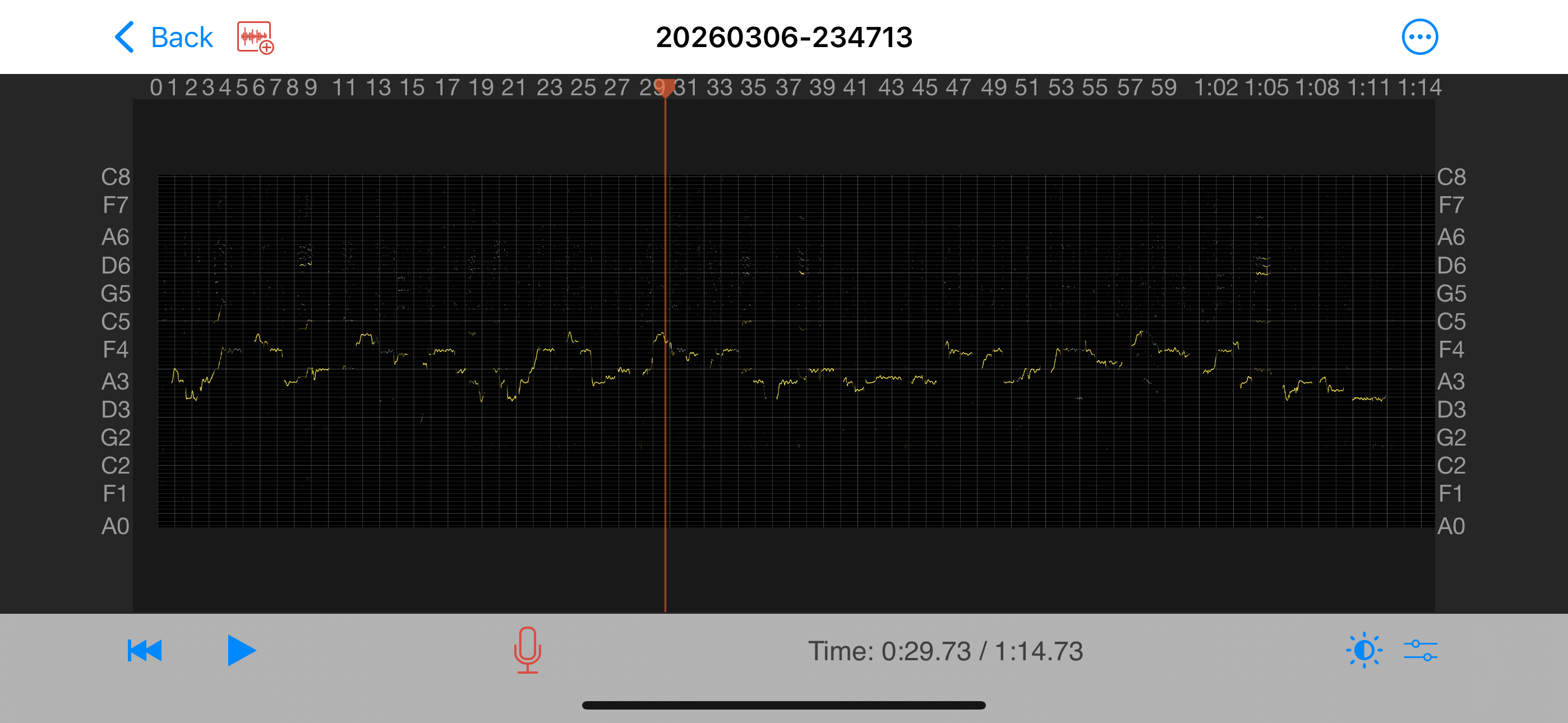
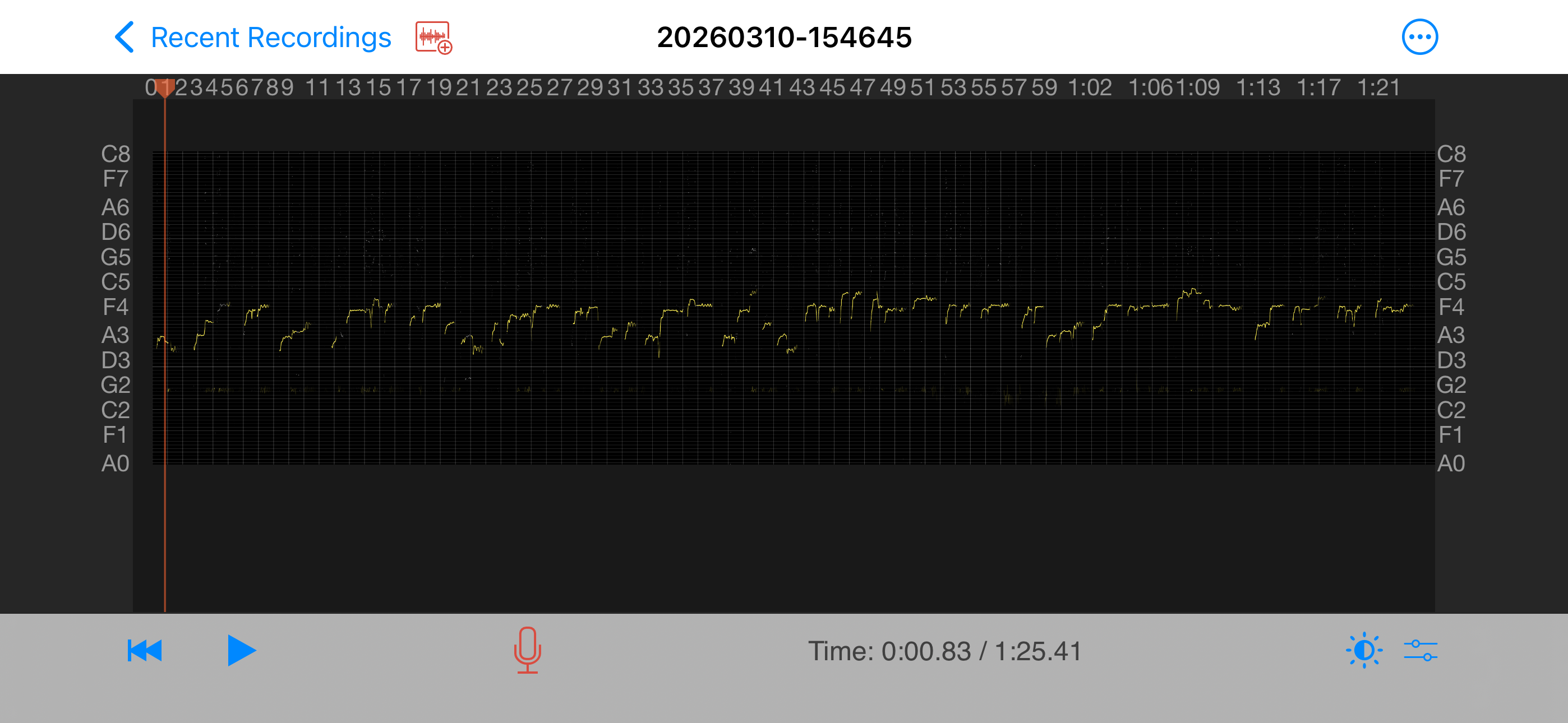
The pitch graphs used to analyze your voice were made with Singscope — a free iOS app. Search "Singscope" in the App Store, or visit singscope.com to learn more. Sing into it and watch the line trace your pitch in real time, with note names labeled (A3, F4, C5…) so you can see exactly where your voice lands — and where it searches.
Full Lyrics
The Star-Spangled Banner
Every ✦ is a breath point. Plan them before you sing — don't improvise. Every breath is a moment of control, not weakness.
✦ Take a breath here
🔴 High or difficult note
[HOLD] Sustain this note fully
⬅ Coach note
✦Oh say can you see,
by the dawn's early light,
✦What so proudly we hailed,
at the twilight's last gleaming?
✦Whose broad stripes and bright stars,
through the perilous fight,
✦O'er the ramparts we watched,
were so gallantly streaming?
✦And the rockets' red glare,⬅ BIG breath
the bombs bursting in air,
✦Gave proof through the night,
that our flag was still there.
✦Oh say does that star spangled,
Banner yet wave,hold "wave"
✦O'er the land of the FREE[HOLD],⬅ biggest moment
and the home of the BRAVE.land with strength
Understanding the Graphs
What This Pitch Graph Shows
The line is your voice, drawn over time. Every peak and valley is a note. Steadiness means control. Movement means the voice is still finding its footing — and that is exactly what practice is for. The more you listen, the more clearly you will hear what your voice is doing, and the easier it becomes to guide it where it needs to go.
Student — First Review
Guide — Magdalena
Illustrated Reference — How to Read the Graph
C5
F4
A3
D3
Your voice — finding the melody
Guide track (Magdalena) — a steadier reference path
When the line is steady
The voice is holding the note with consistent air support. The pitch is controlled, the breath is even. This is what we're building toward — every note placed clearly on the path.
When the line dips or wobbles
The voice is searching for the note, or the breath is running out. This is not a sign of a bad voice — it's a sign that the note needs more support, or that a breath was needed a little earlier.
What your recording shows
You find the melody — the line moves in the right direction. Your voice dips in places, but it comes back. That's real ear. The mission now is to smooth the path you already know.
What the guide recording does
The guide track was recorded in a balanced key so every note sits in a place you can control. It's not a different voice — it's a clearer trail marker, placed on every stone so your foot knows exactly where to land.
Honest Encouragement
Your Voice — Where You Are
This isn't about what went wrong. It's about where you already are, and the small steps from here.
✨ Your Voice Strengths
🎯You have a natural tone quality — your voice has character and warmth
👒You recognize where the melody should move — your ear understands the song
📊You can reach both the higher and lower notes of the melody
🔄When the pitch dips, you find your way back — that's real musical instinct
💪You carry weight in your voice — there's presence when you sing
🎯 What We Are Building
→Landing on notes cleanly — arriving at the pitch without sliding into it
→Holding notes steady through their full length — consistent airflow
→Controlling breath through long phrases — planning every breath point
→Keeping the lower notes supported — low doesn't mean quiet or thin
→Staying relaxed on the highest notes — open, not pushed
"You already know where the road goes. We're just learning how to drive in a straighter lane. The map is already in your ear — now we're building the skill to follow it."
Magdalena Lezama-EscalanteYour Voice Guide
Watch Out For These
Typical Sliding Spots
Many singers naturally scoop into these notes. Knowing where it happens is the first step to fixing it.
"say can you see"
Land directly on each word. Don't slide up from below.
"rockets' red glare"
Take a full breath before this phrase. The jump is large.
"land of the free"
The highest note of the song. Stay relaxed. Think open, not forced.
About the Key We Used
Many singers try to start this song too high, which makes the final high note painful or unreachable. The guide recording was set in a key that puts the melody in a comfortable middle range — so the final note on "free" is reachable without strain. If a different key feels better for your voice, that is always a valid adjustment. The goal is balance: low notes that stay full, high notes that stay open.
The Story Behind the Song
Sing With Intention
Francis Scott Key wrote this song after watching a battle through the night, not knowing if his side had survived. The song is a question — "Is the flag still there?" — answered at dawn with relief and wonder. Knowing that changes how you sing it.
There is no need for riffs, runs, or vocal shows. The melody is already complex and meaningful. What carries this song is clarity, breath, and intention. Sing it simply. Sing it truly. Let the words do the work.
Practice pronunciation by allowing each word to rest on your tongue before it leaves your mouth. The way you shape your mouth will directly affect the sound that comes out — the position of your lips, jaw, and tongue all change the tone. Try singing just the vowels of each line and notice the difference in sound between each letter. That awareness is what you want to carry into every line you sing. Sometimes it can look like you are moving your lips the way someone would across a room — shaping words so clearly that someone could read them before they even hear sound. That precision is what gives the anthem its clarity.
❓
Uncertainty
"Oh say can you see…" — Begin with quiet wonder
🛡
Endurance
"Through the perilous fight" — Steady, grounded
⚡
Tension
"Rockets' red glare" — Energy rises here
🌅
Triumph
"Land of the free" — Give it everything, with control
Take Care of Your Voice
Before You Sing
Your voice is a physical instrument. What you do with your body in the hours before you sing makes a real difference.
✓ Do This
💧 Drink water steadily all day, not just before you sing
🍵 Warm herbal tea with honey soothes the throat
Start warming up with gentle humming before full voice
Lip trills — buzz the lips on a steady breath
Gargle warm salt water to reduce dryness
😴 Get a full night of sleep before performance day
Speak softly — don't whisper, but don't shout either
🌿 Helpful Things
Throat Coat herbal tea is caffeine-free and very soothing
Warm lemon water with real honey in the morning
A warm steamy shower loosens the vocal cords
Watermelon and hydrating fruits help the throat
🎤 Test your microphone before the ceremony
Deep, slow breaths calm nerves before you step up
✘ Avoid Before Singing
☕ Coffee and caffeinated teas dry out the cords
Cold drinks constrict the throat muscles
Heavy dairy creates excess mucus and affects tone
Shouting, loud talking, or cheering earlier that day
Orange juice or acidic drinks can cause reflux
Heavy meals right before affect breath support
Simple Warm-Up
Before You Practice
These are simple, accessible exercises. You don't need a vocal coach to do them — just a quiet space and a few minutes.
1
Scales on "May"
Sing "may-may-may-may-may" up and down a simple scale. Keep it light — this wakes up the voice gently before going to full volume.
2
Gentle Hum
Hum softly on one note. Feel the vibration in your lips and face. Slide slowly up and down. 1–2 minutes.
3
Lip Trills
Keep your lips loose and buzz them on steady breath — like a motorboat. Slide up and down in pitch. Releases tension.
4
Diaphragm Breath
Place one hand on your belly. Breathe in — the belly pushes out, not the chest. Make an "S" sound as you slowly exhale. Repeat 5 times.
5
Sing One Section
Sing just the opening phrase at half volume. No pressure. Let the voice find its center before going full.
6
Yawn & Sigh
Open your mouth in a wide yawn. Let the sound come out as a sigh from high to low — "Ahhh." Opens the throat naturally.
Your Assignment
Practice Homework
This is how we measure progress. Not by feeling — by recording and comparing. The voice improves fast when it hears itself clearly.
This Week's Assignment
Complete these steps before sending your next recording. Don't rush it — let yourself actually practice between recordings.
01Listen to the guide recording at least 3 times before singing along. Just absorb the path of the melody first.
02Practice each line separately using the section recordings above. Don't run the whole song until each part feels comfortable on its own.
03Mark your breath points. Write them on a sheet of paper. Breathe exactly there every single time.
04Focus on landing on notes cleanly — not sliding into them. Arrive at the pitch directly, then hold it steady.
05Record yourself doing a full run-through. Listen back. Notice one thing that improved. Notice one thing to keep working on.
06Send your new recording so we can compare it to your first one and update this page with your progress.
Remember This
"Think of this song like stepping stones across a river. At first you step around trying to find the right stone — that's normal. The guide recording shows you exactly where the stones are, so you can step from one to the next with confidence."